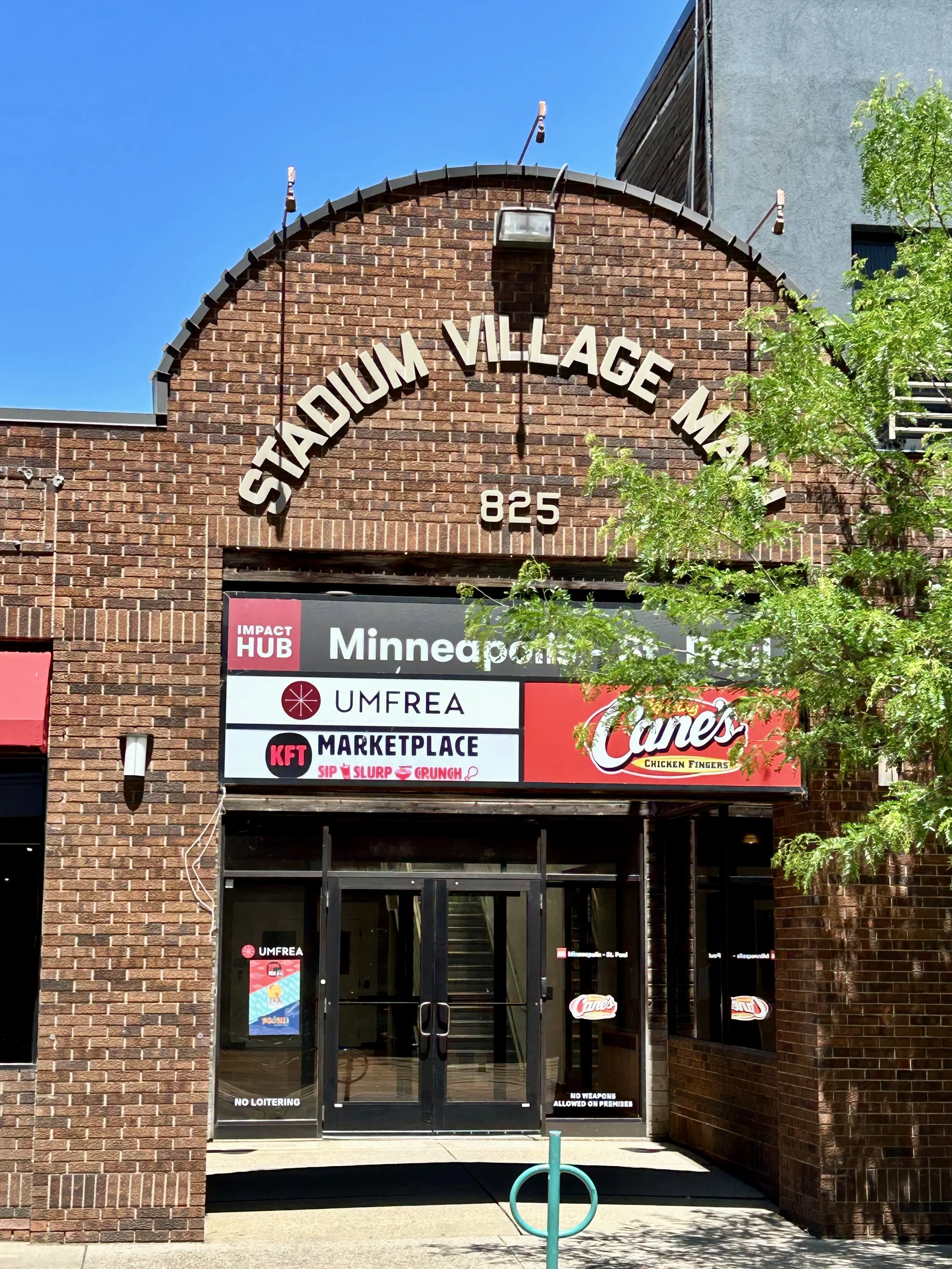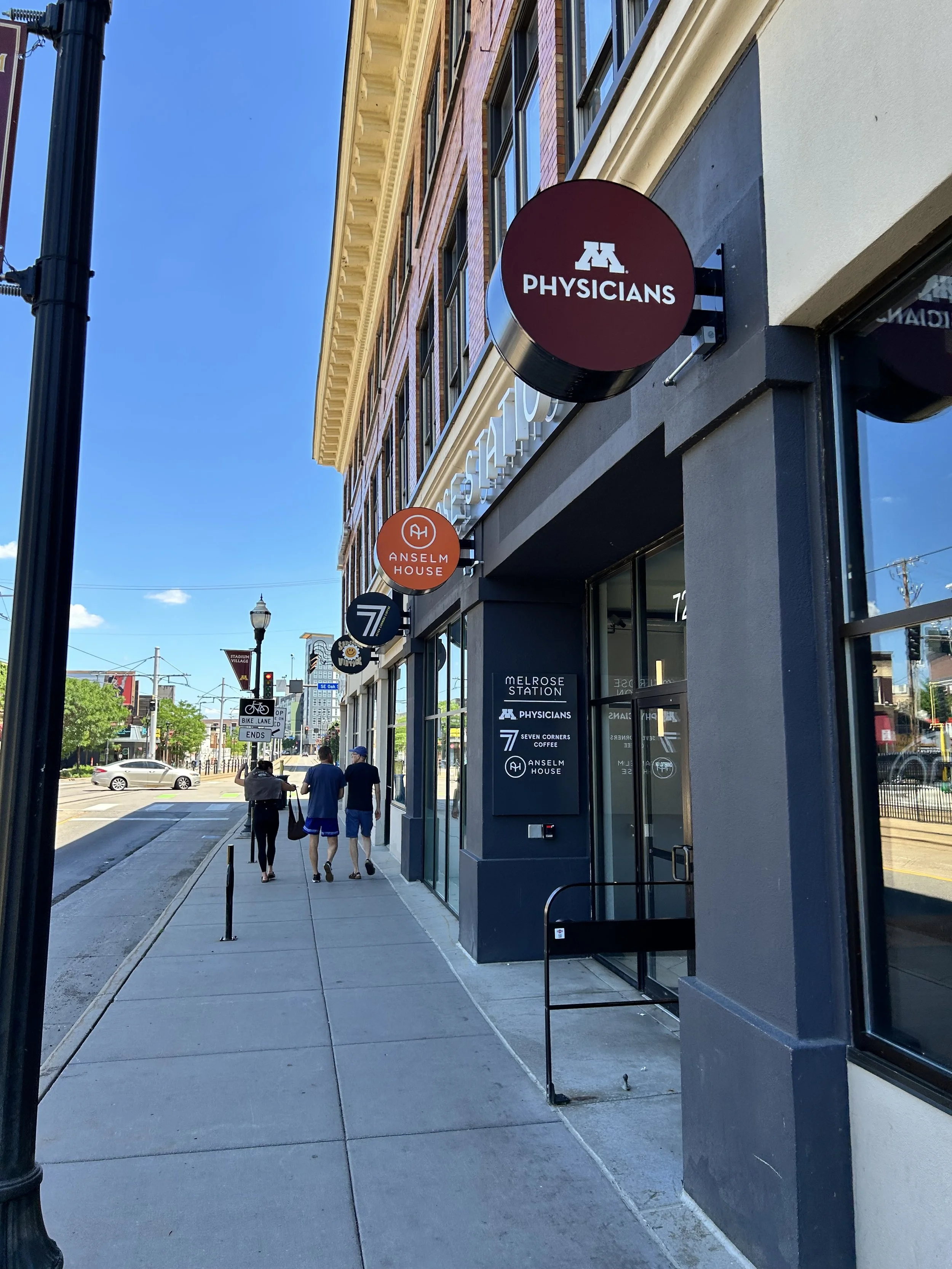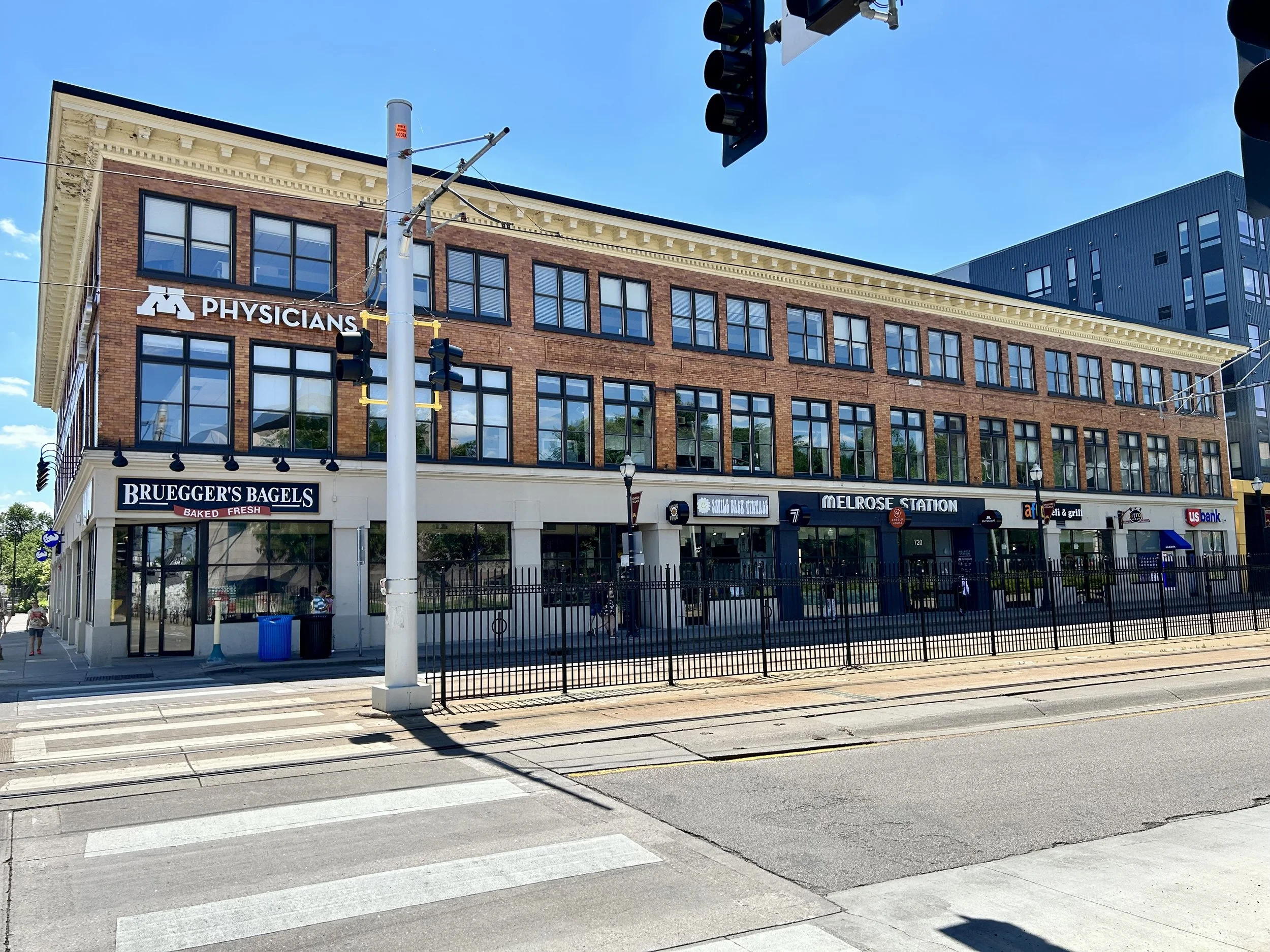
STADIUM VILLAGE.
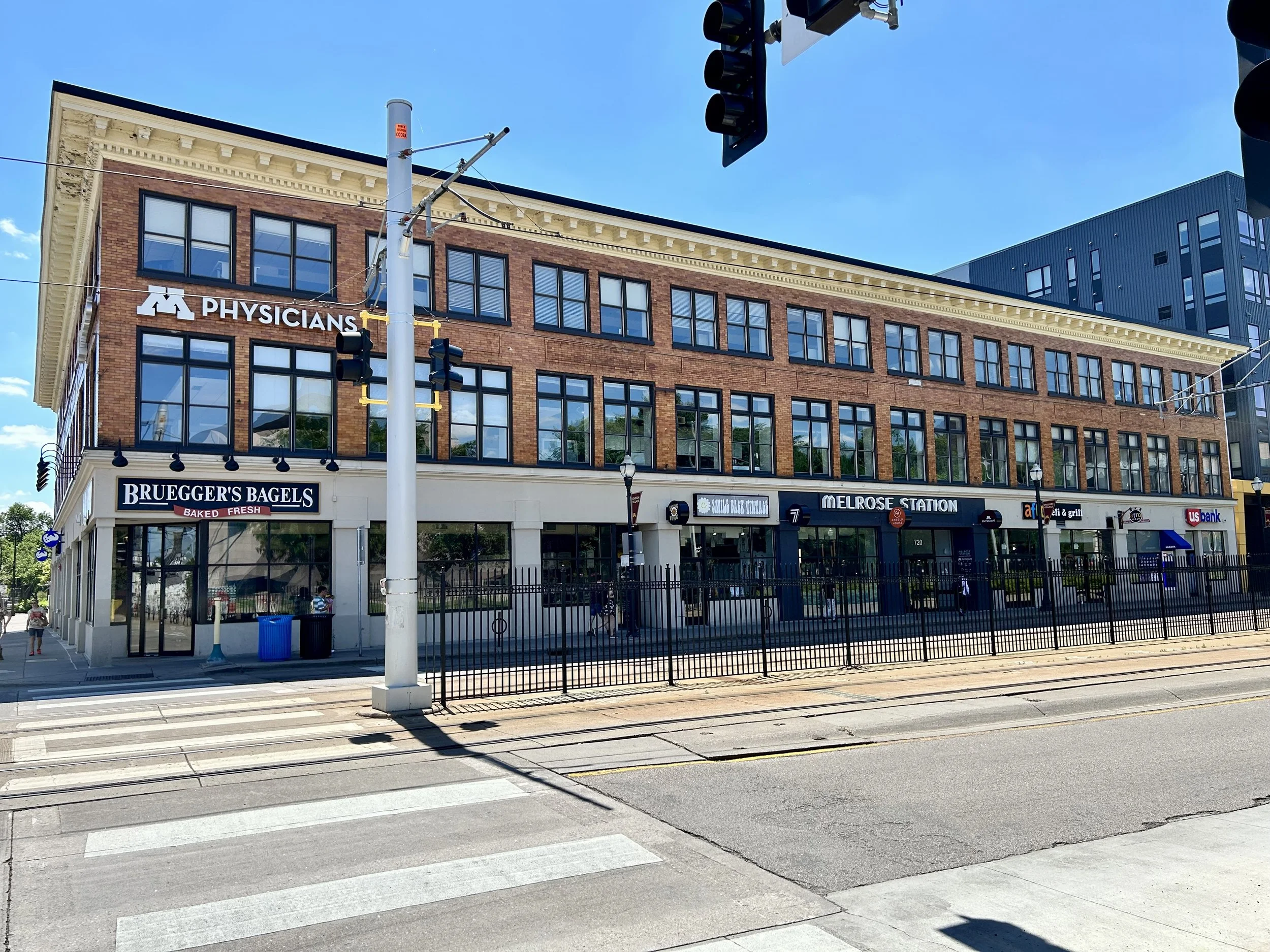
The Stadium Village commercial district emerged during the early twentieth century as the University of Minnesota rapidly expanded eastward across its Minneapolis campus.
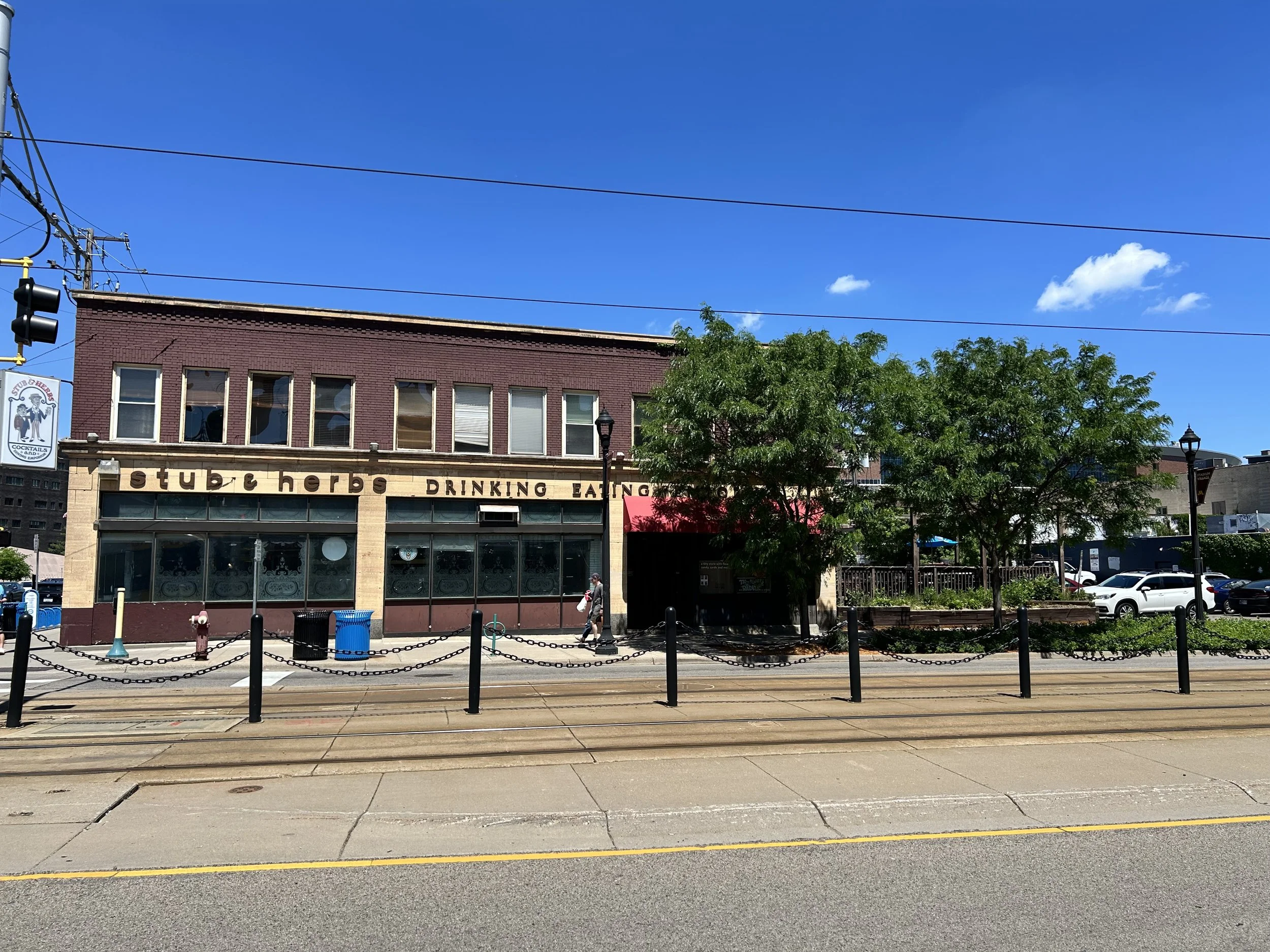
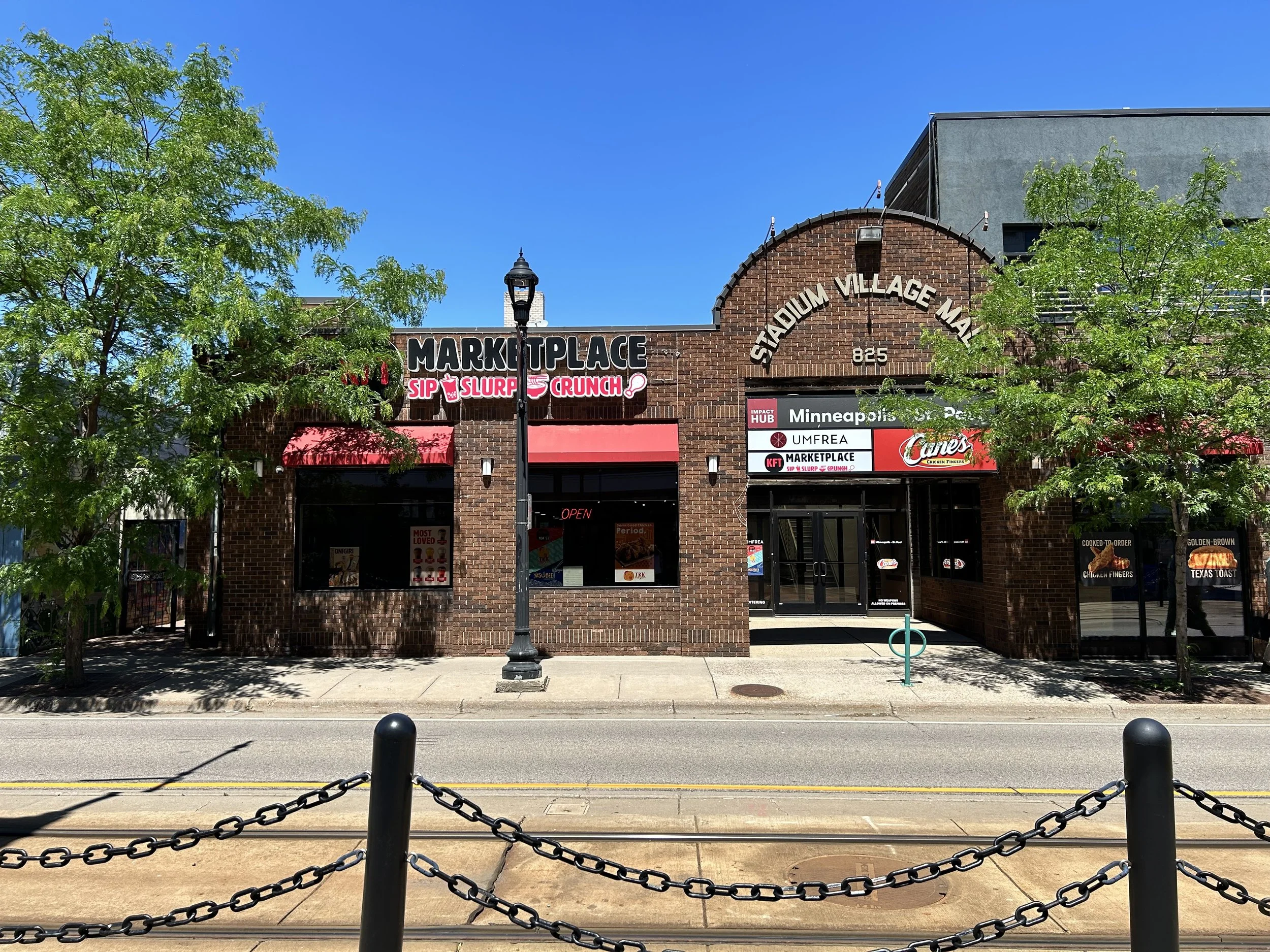
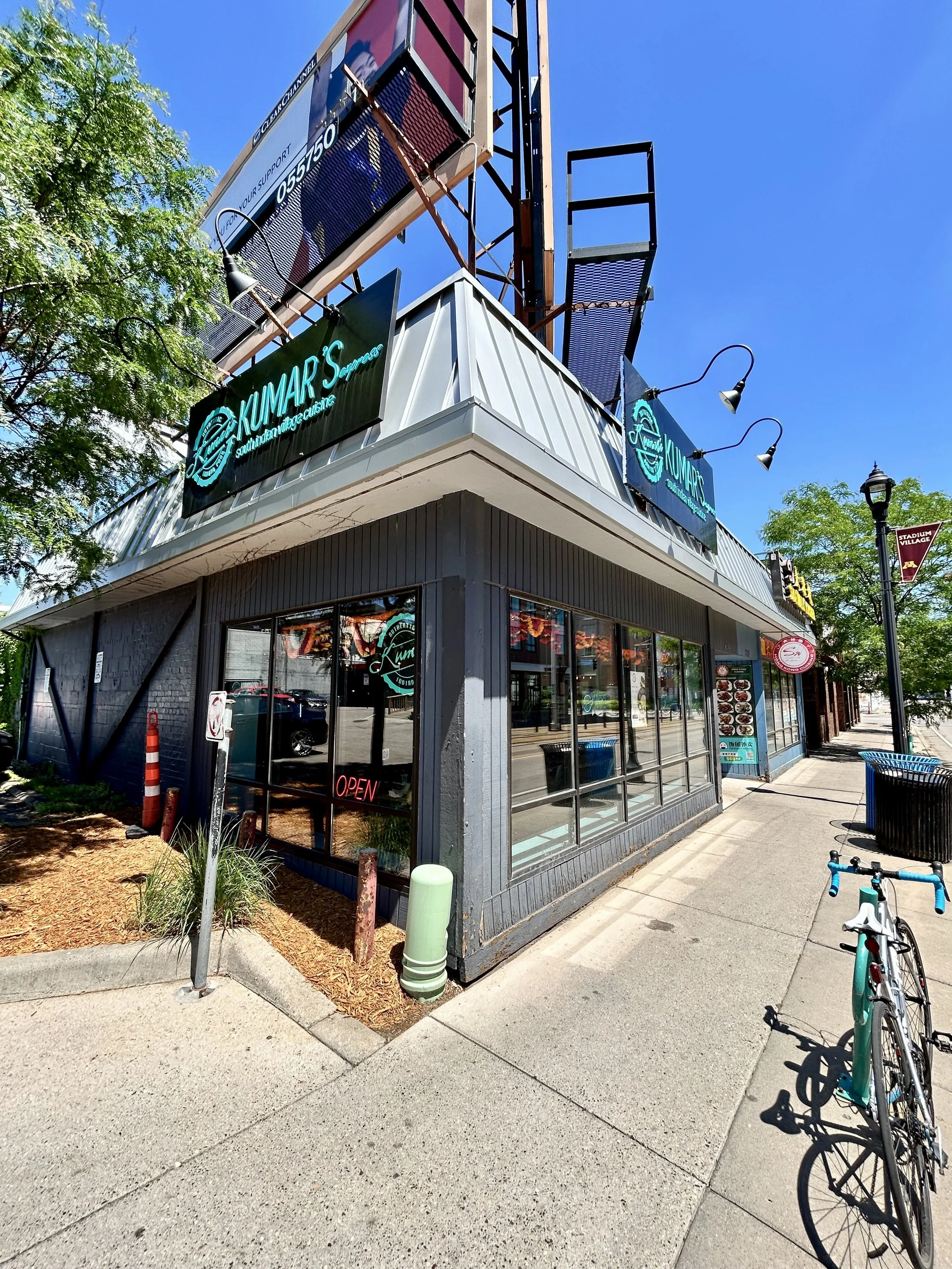
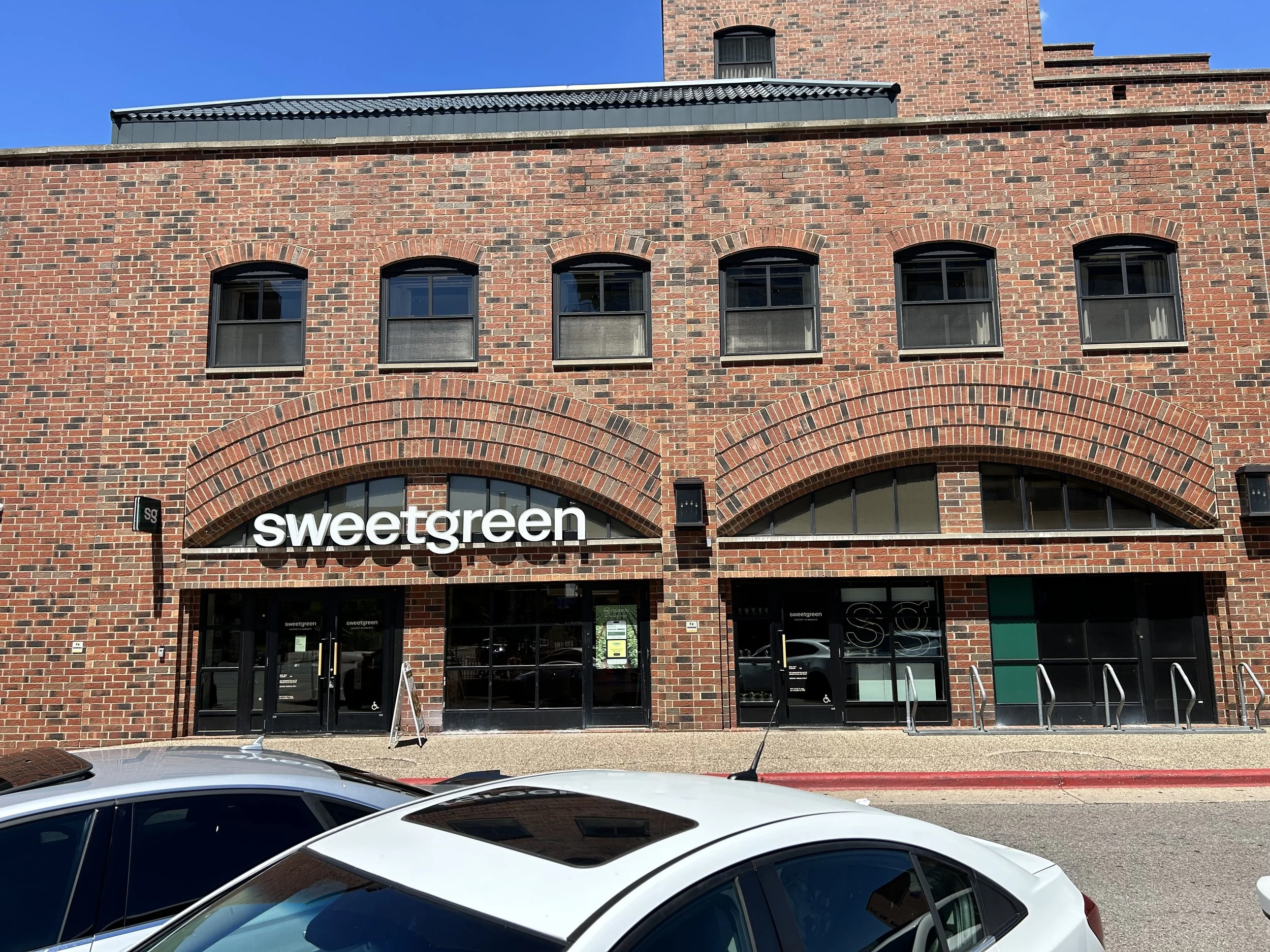
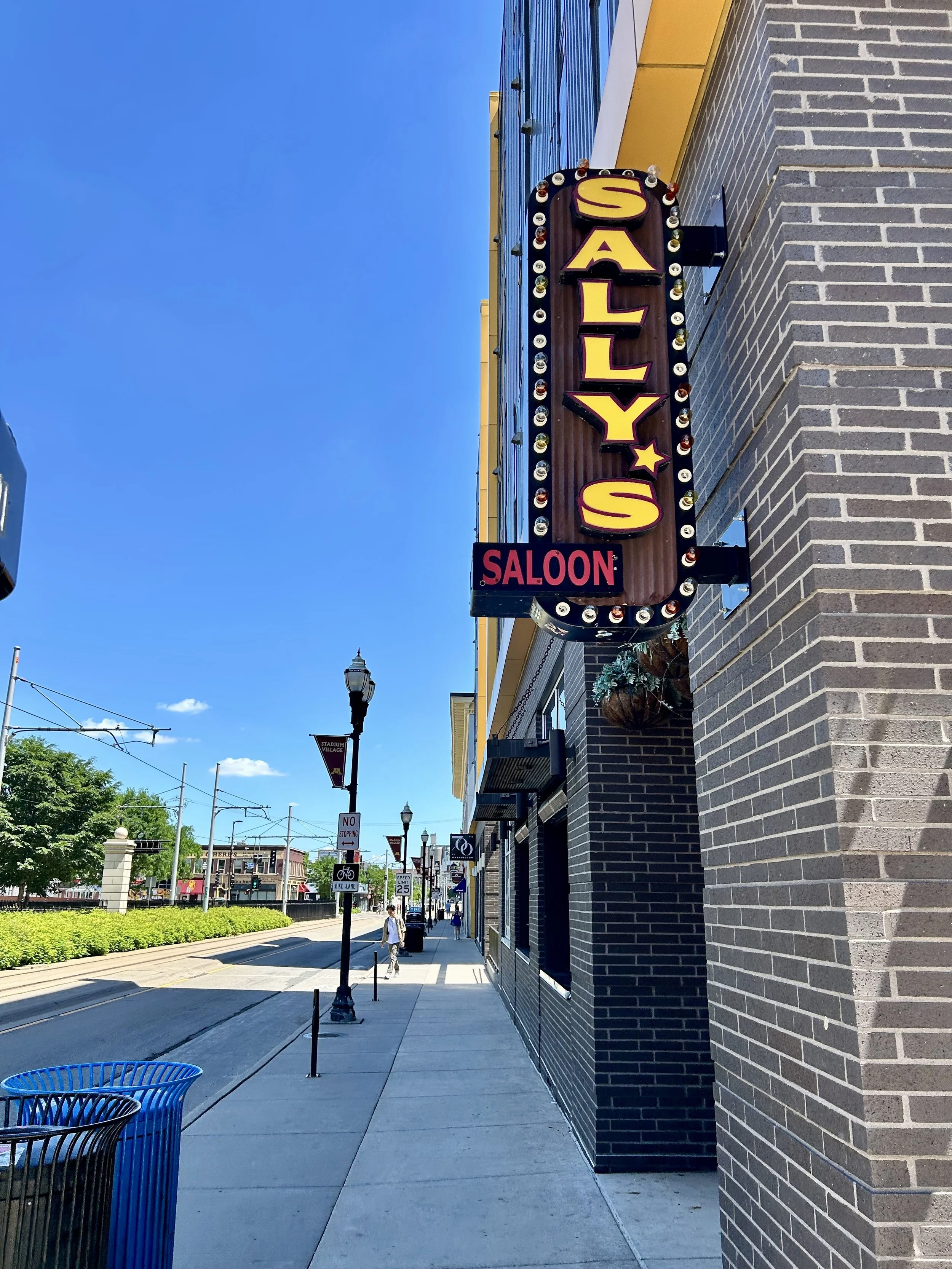
Centered primarily along Washington Avenue SE and Oak Street SE, the district developed alongside the construction of major university athletic facilities, student housing, and academic buildings. Its identity became firmly tied to Memorial Stadium, the University of Minnesota football stadium completed in 1924. Businesses clustered nearby to serve students, faculty, sports fans, and visitors attending football games and other university events. Restaurants, taverns, cafés, bookstores, convenience stores, and student-oriented retail establishments helped establish Stadium Village as one of the university’s primary commercial nodes outside of Dinkytown.
Unlike Dinkytown, which grew from an earlier streetcar-era commercial district with deep nineteenth-century roots, Stadium Village largely developed as a twentieth-century university district shaped by institutional expansion and automobile-era planning. The construction of Memorial Stadium gave the area both its identity and its name, and the surrounding commercial corridor evolved in response to game-day crowds and increasing university activity. Over time, nearby athletic and institutional facilities — including Williams Arena, Mariucci Arena, and other university sports venues — reinforced the district’s role as a center of campus life and entertainment. Even after Memorial Stadium closed in 1981 and was demolished in 1992, the name “Stadium Village” endured as the commercial identity of the area.
For much of the late twentieth century, Stadium Village functioned as a somewhat secondary commercial district compared to the larger cultural identity of Dinkytown. The area remained heavily influenced by surface parking lots, wide roadways, university facilities, and relatively low-density commercial development. However, major changes began to reshape the district in the early 2000s. A critical turning point came in 2009 with the opening of TCF Bank Stadium — now Huntington Bank Stadium — on or near the site of the former Memorial Stadium. The return of major outdoor football to campus dramatically increased activity and investment in the surrounding area, helping spur a new era of redevelopment and student-oriented growth.
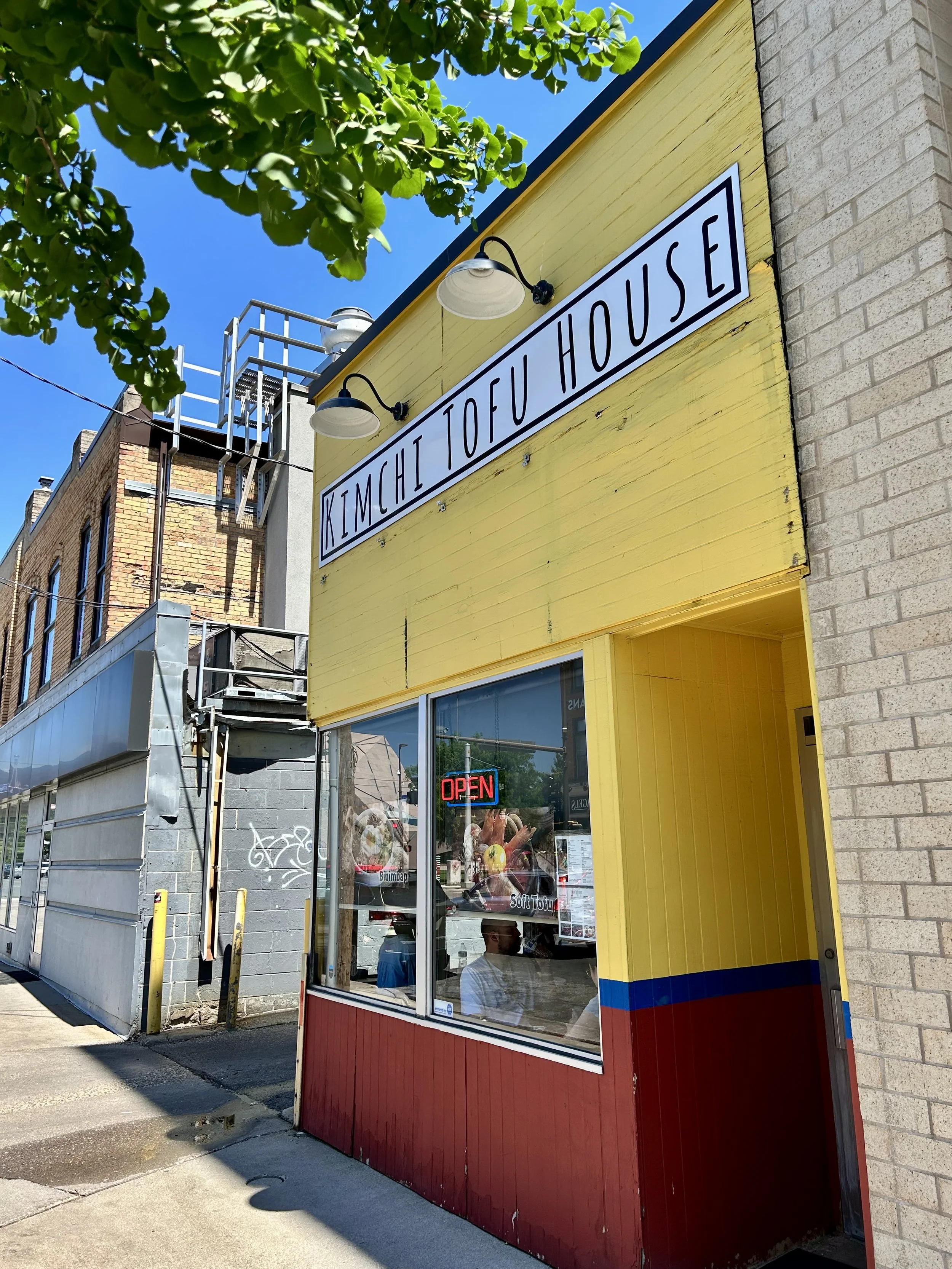
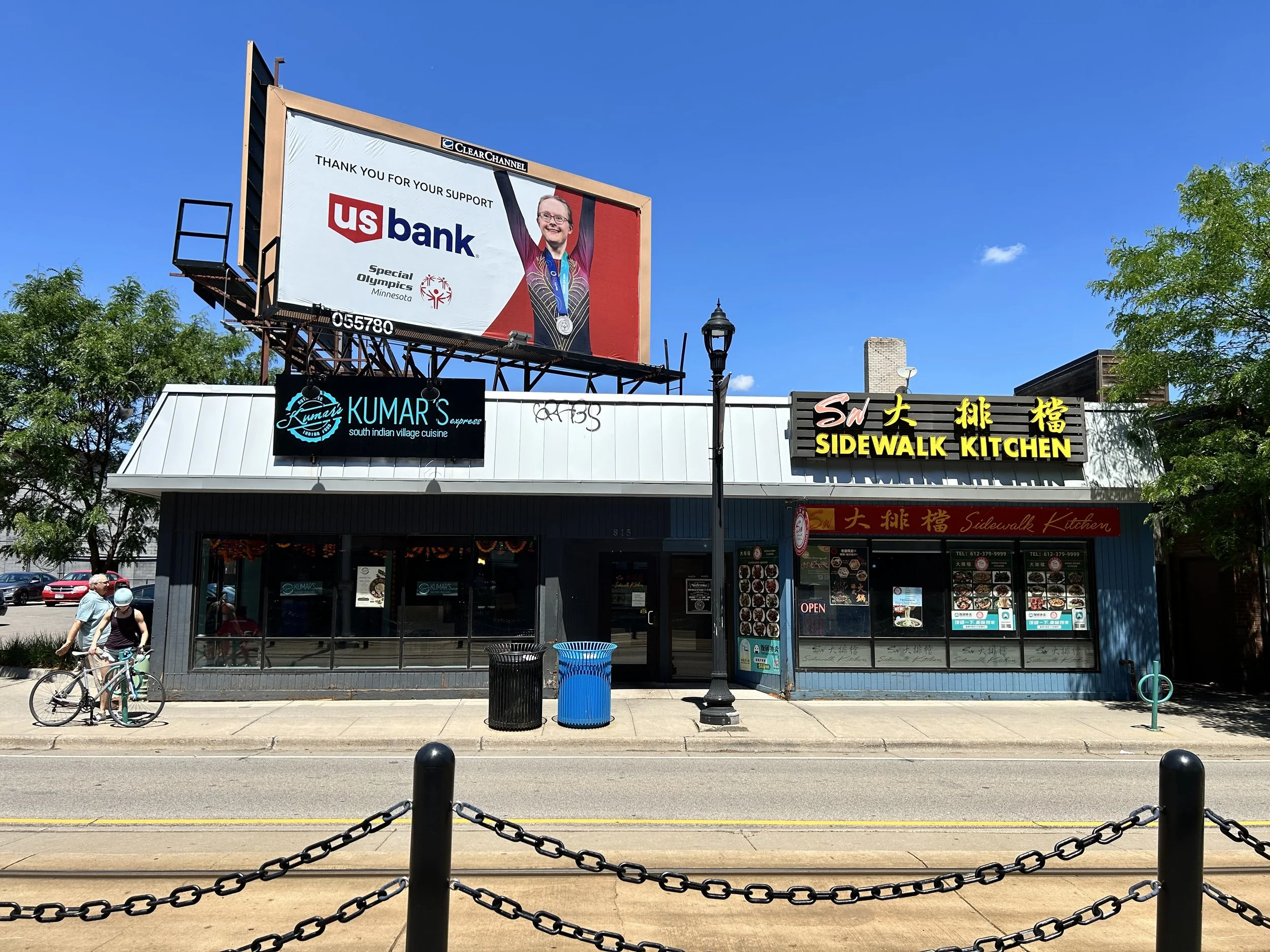
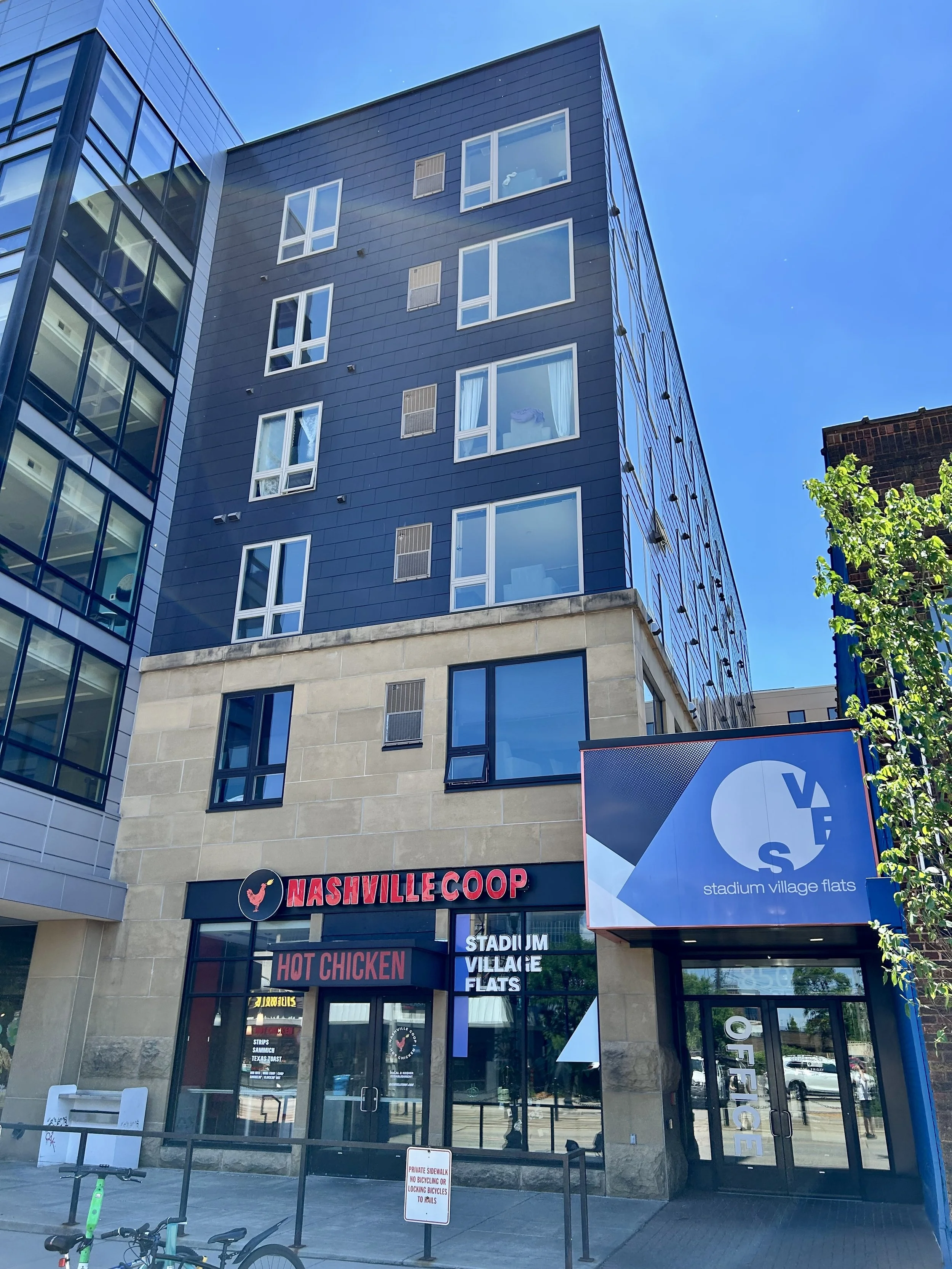
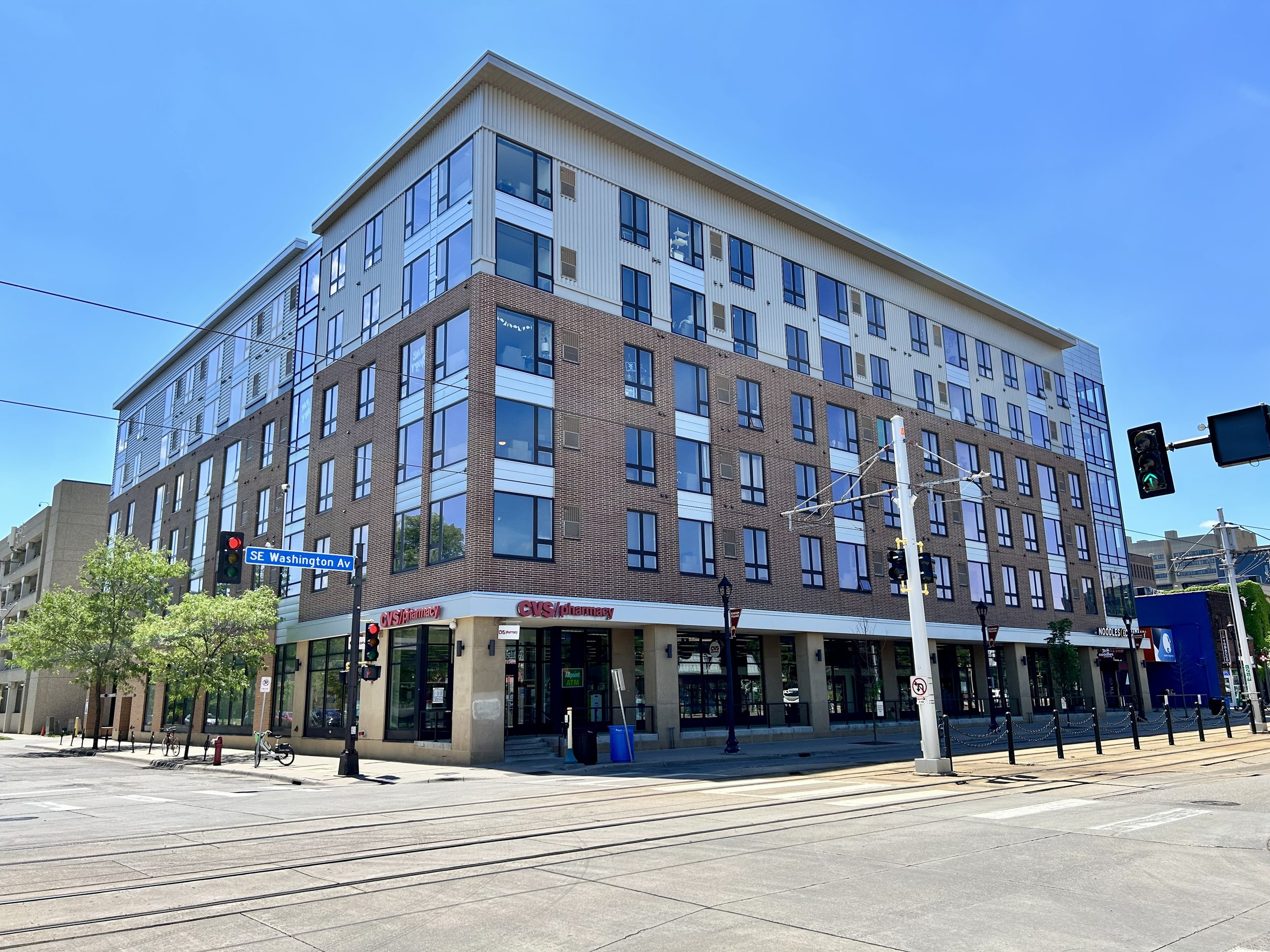
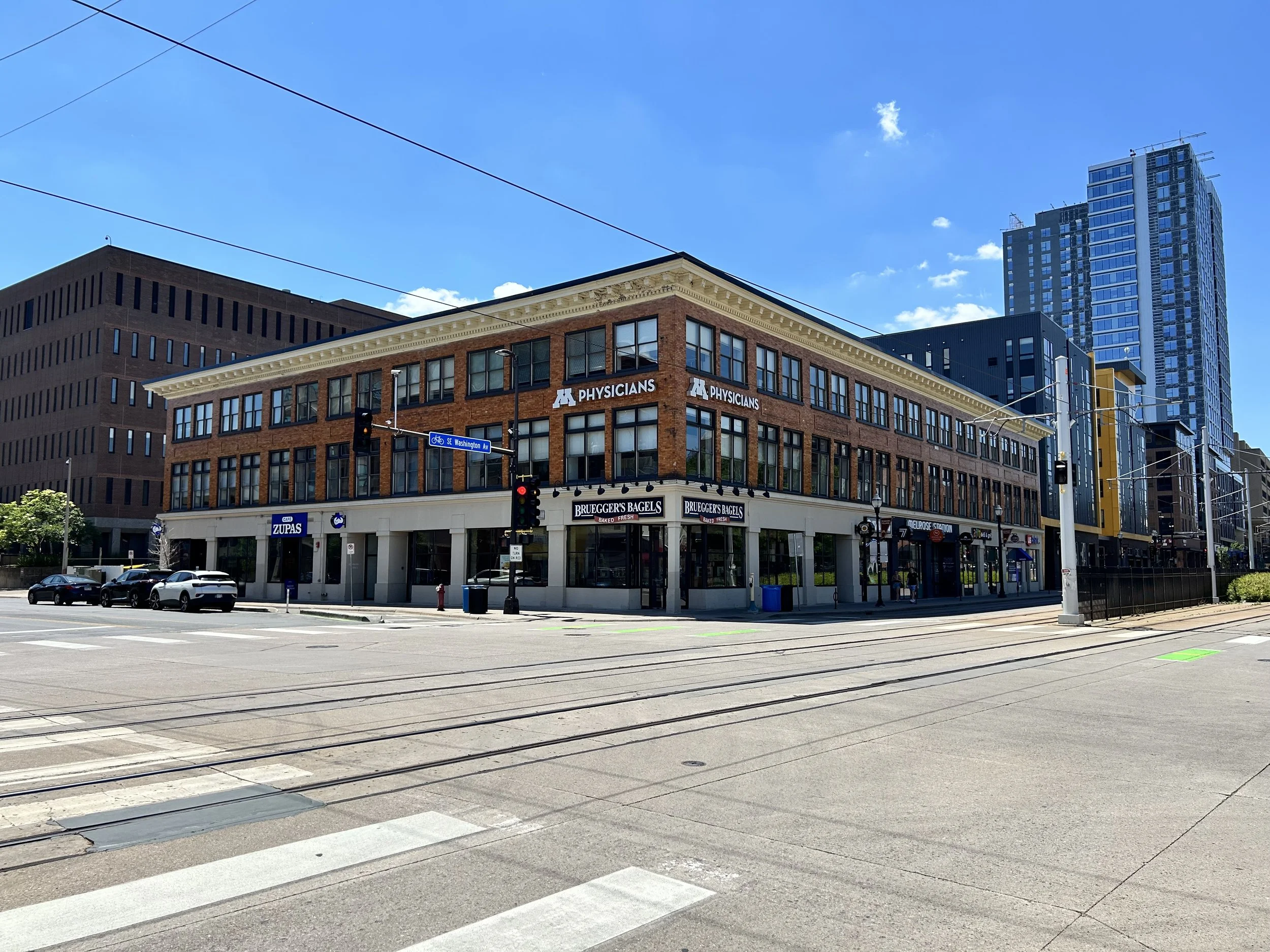
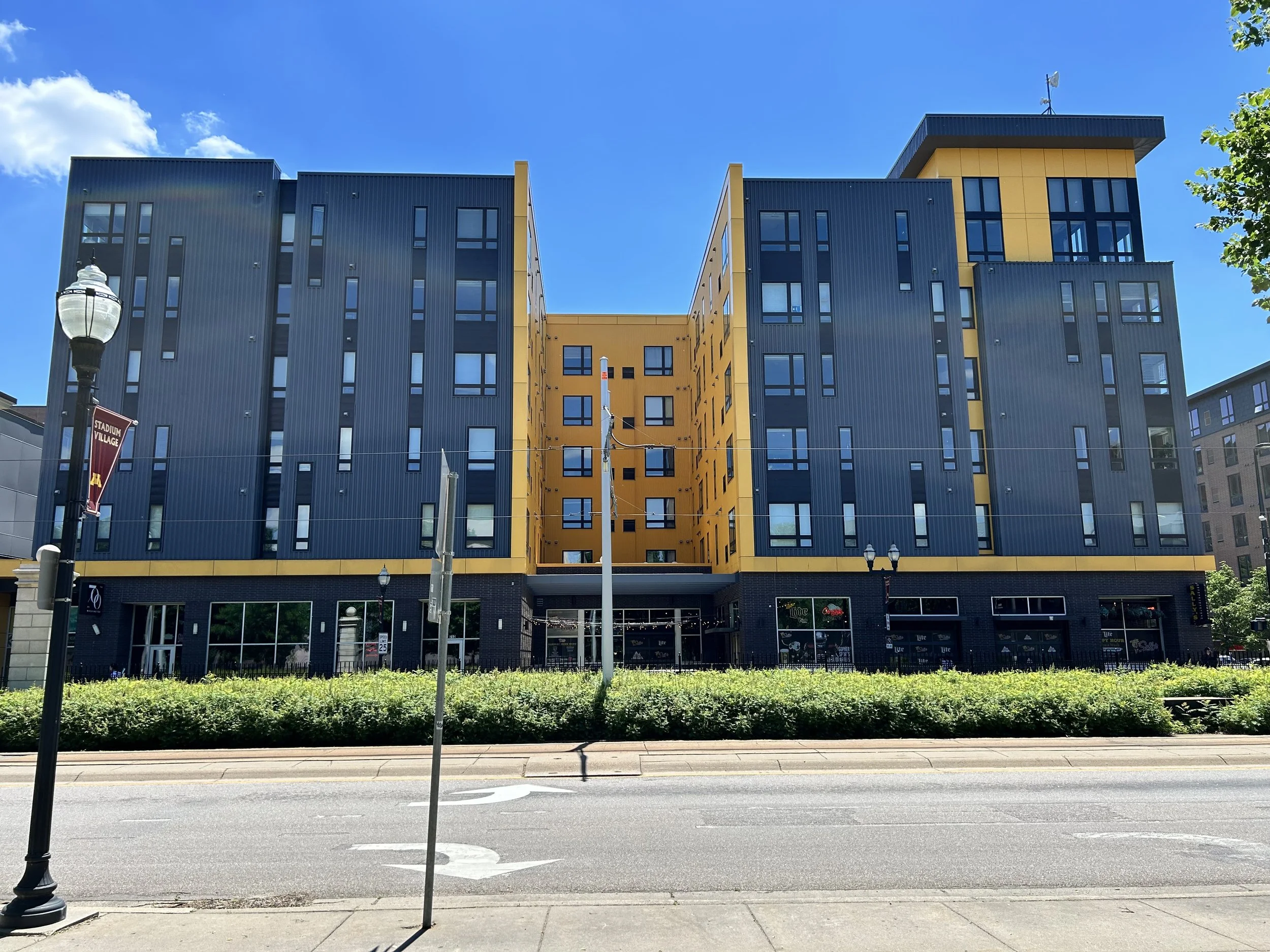
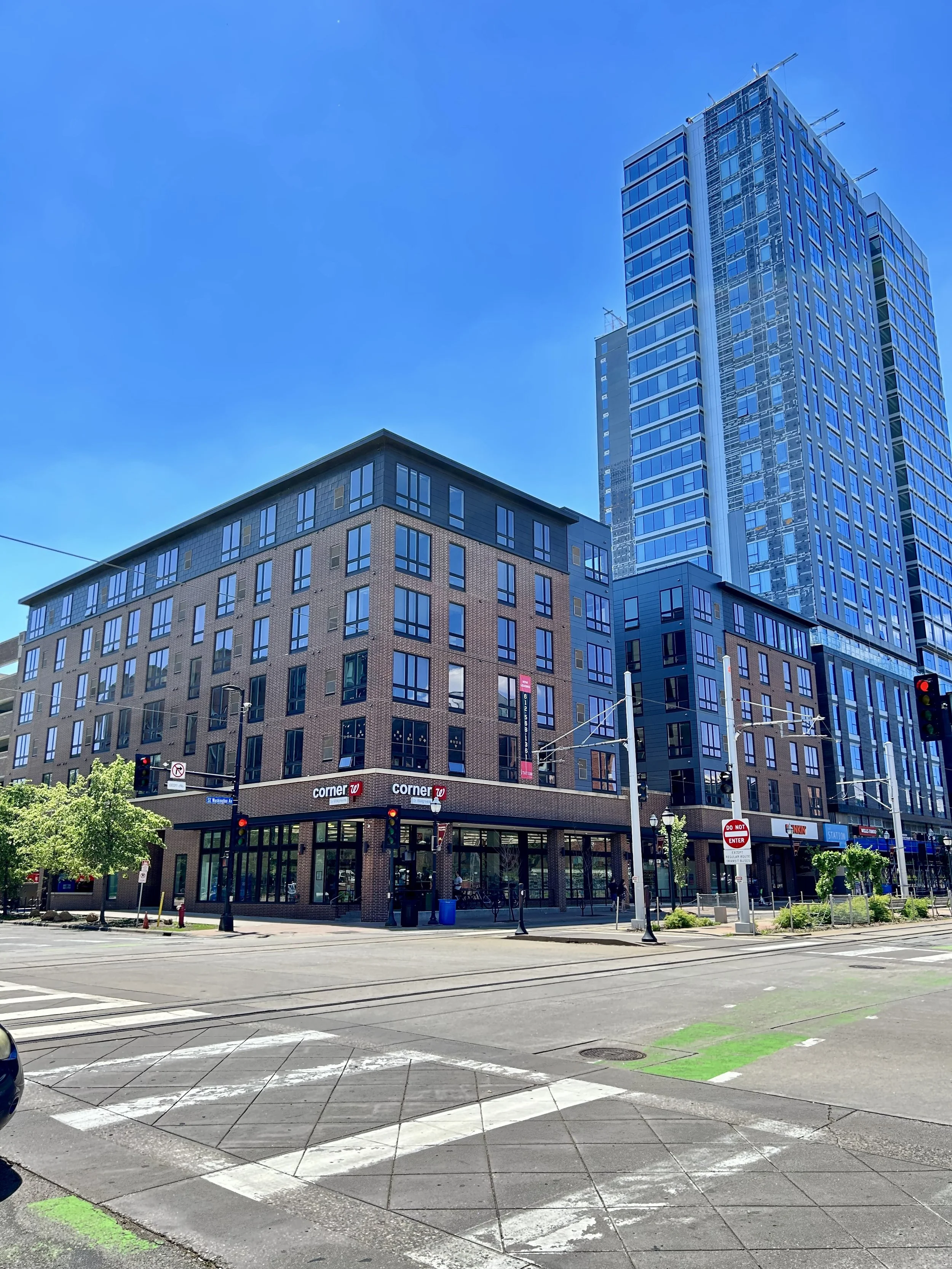
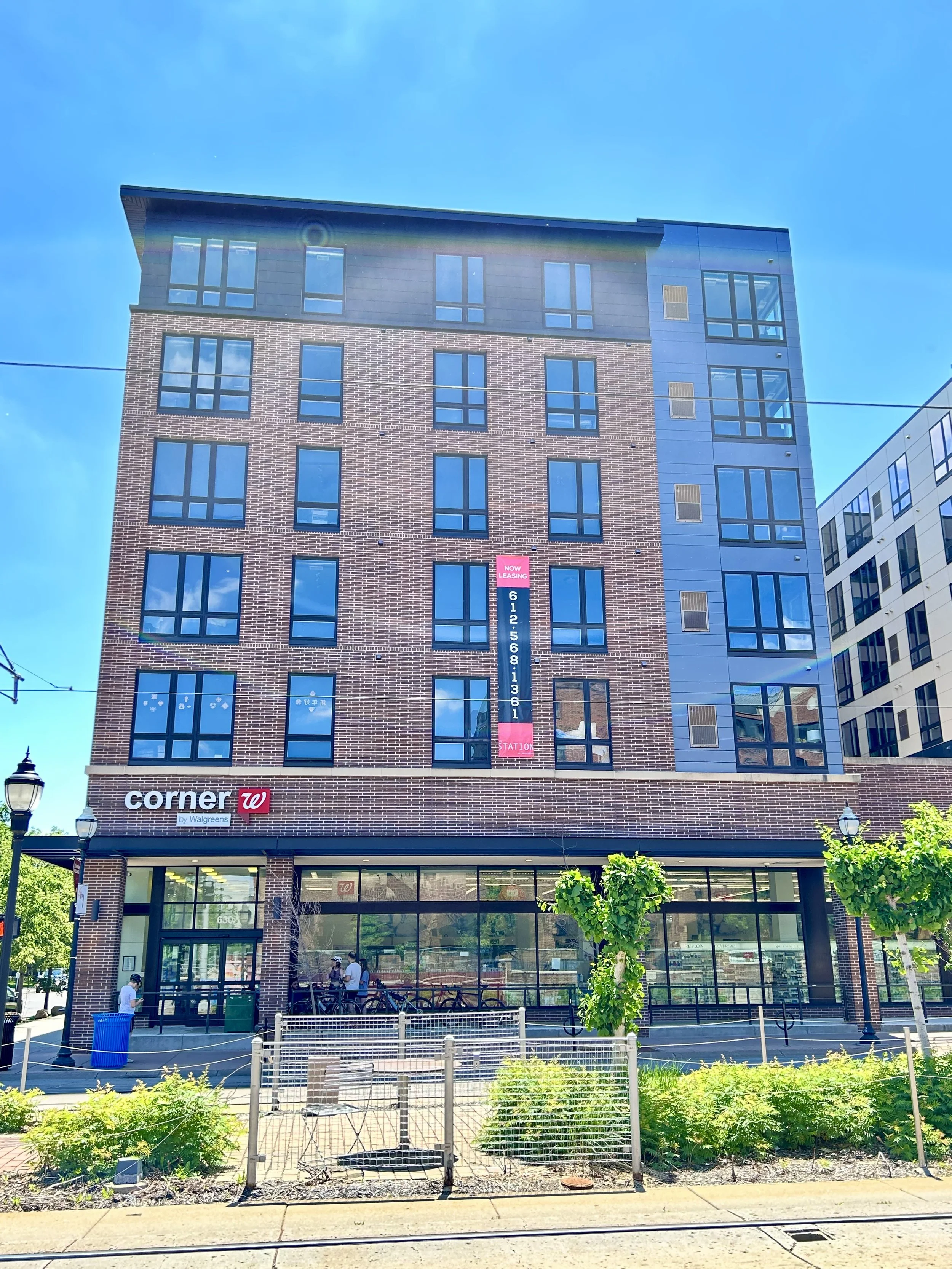
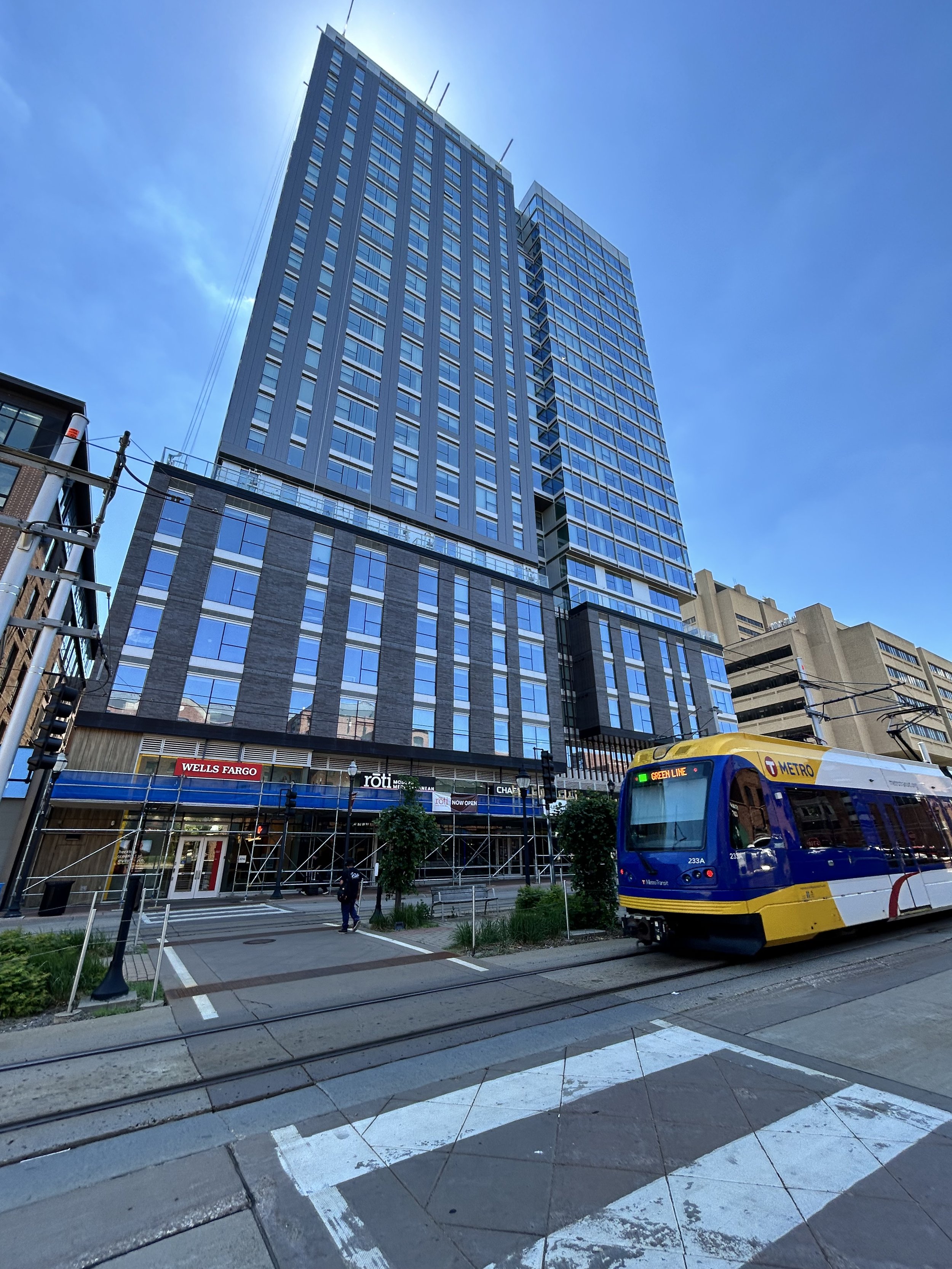
Another transformative moment arrived with the construction of the METRO Green Line light rail, which opened in 2014 and fundamentally reshaped Washington Avenue SE through the district. The corridor transitioned from a largely automobile-oriented roadway into a multimodal transit corridor prioritizing light rail, buses, bicycles, and pedestrians. The Stadium Village station became one of the University of Minnesota’s primary transit hubs, significantly increasing accessibility and encouraging denser redevelopment. At the same time, large mixed-use student housing projects, new restaurants, and modern commercial developments rapidly transformed the district’s physical character. What had once been dominated by parking lots and low-rise commercial buildings increasingly evolved into a high-density university district centered around transit, housing, entertainment, and campus activity.
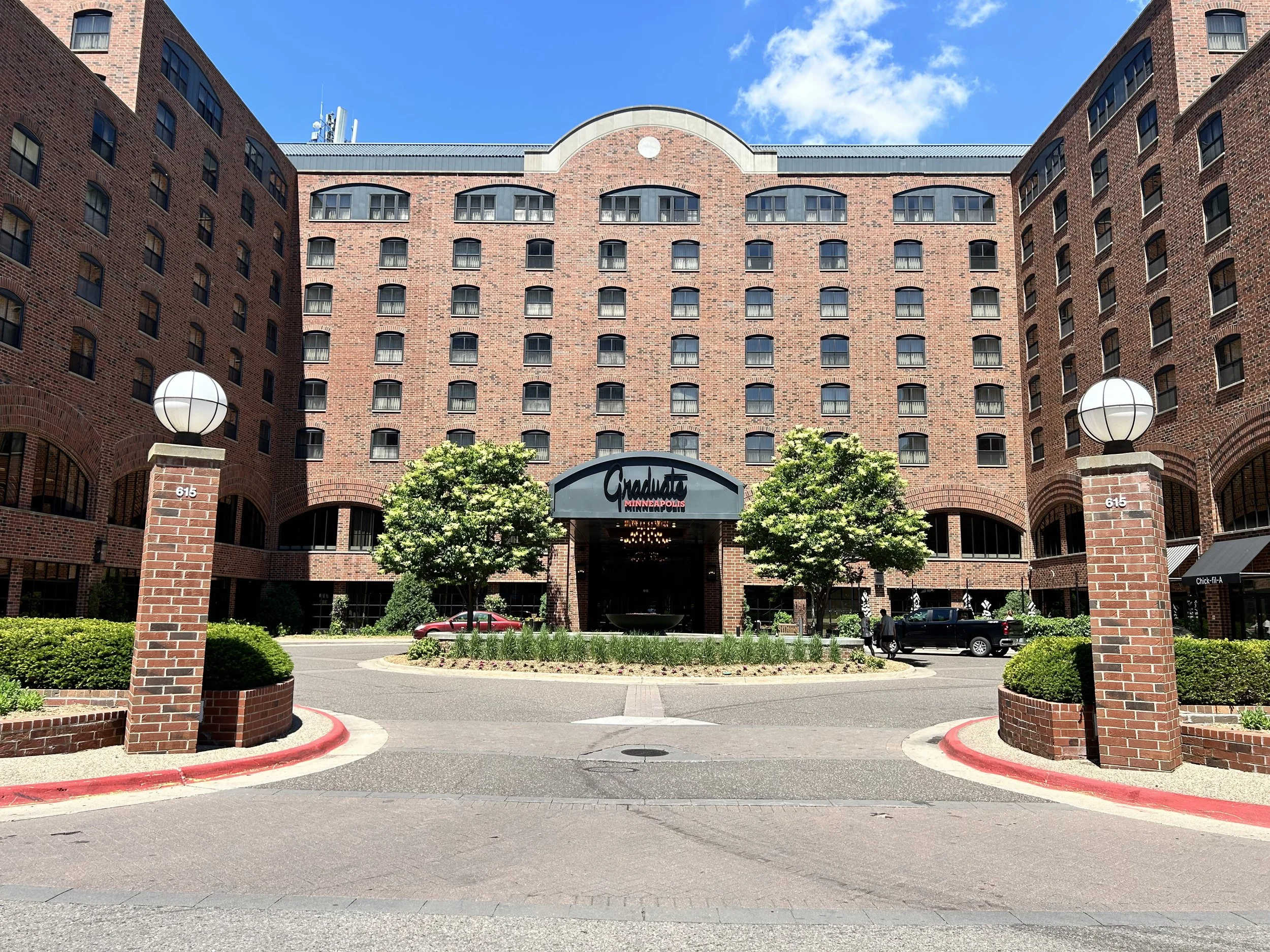
Today, Stadium Village stands as one of Minneapolis’ fastest-evolving commercial districts, blending university life, sports culture, transit-oriented development, and high-density urban growth. The district serves as a major gateway to the University of Minnesota, connecting students, workers, residents, and visitors through regional transit and pedestrian infrastructure. While newer development has dramatically altered portions of the area, Stadium Village continues to reflect its historic relationship to university athletics and campus life. Its identity remains closely tied to the energy of game days, student activity, and the evolving urban landscape surrounding one of the nation’s largest public universities.